

Types of EKG Tests: Which One is Right for You?
There are various types of EKG tests used to assess heart function, including the standard 12-lead EKG, Holter monitor, and stress EKG. Each test serves a different purpose, such as monitoring heart rhythm over time or assessing heart performance under stress. Dr. Wael Mctabi and Dr. Samiullah Choudry at Internal Medicine and Family Practice recommend discussing your symptoms and medical history to determine which EKG test is most appropriate for you. For more information, book an appointment online or contact us. We are located at 1719 Glenwood Ave Joliet, IL 60435.
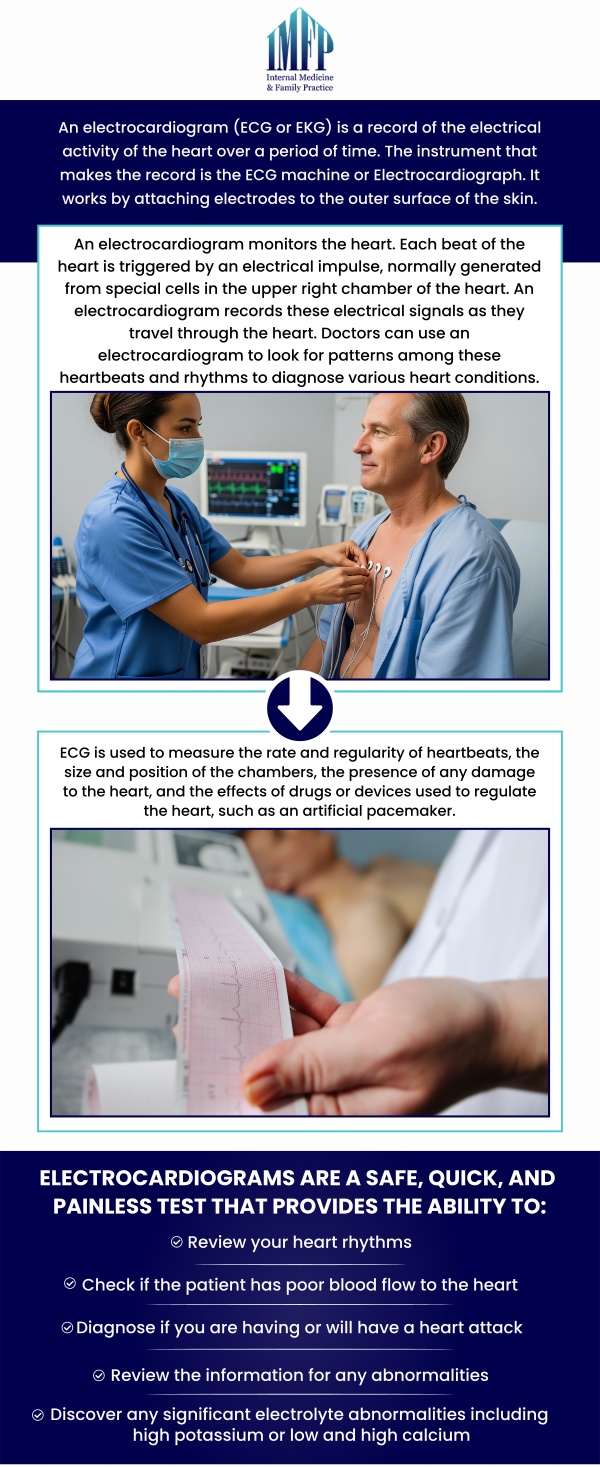
Table of Contents:
What are the different types of EKG tests?
What is a resting EKG?
What is a stress test EKG?
What is an event monitor, and when is it used?
How do I know which type of EKG test is right for me at Internal Medicine and Family Practice?
An electrocardiogram (EKG) test records the electrical activity of the heart to help detect various heart conditions. There are several types of EKG tests, each designed to evaluate the heart in different ways depending on the situation. Here are the most common types:
1. Resting EKG: This is the most basic and common type of EKG, done while the patient is at rest. Electrodes are placed on the chest, arms, and legs to measure the heart’s electrical impulses. A resting EKG can help detect arrhythmias, signs of heart attacks, and other heart-related issues.
2. Stress EKG (Exercise EKG): This test involves exercising, usually on a treadmill or stationary bike, while being monitored by an EKG. It helps assess how the heart responds to physical exertion, helping doctors identify coronary artery disease and other heart issues that might not show up at rest.
3. Holter Monitor: A continuous 24-48-hour EKG, the Holter monitor records the heart’s electrical activity throughout the day and night. It helps doctors detect irregular heart rhythms that may not appear during a short, one-time test like a resting EKG.
4. Event Monitor: Similar to the Holter monitor but worn for longer periods (up to 30 days), the event monitor records heart activity only when the patient experiences symptoms like palpitations or dizziness. It helps capture intermittent heart rhythm problems.
At Internal Medicine and Family Practice, various EKG tests are available to help accurately diagnose heart conditions based on symptoms and needs.
A resting EKG is a simple and non-invasive test that records the electrical activity of the heart while you are at rest. It is typically the first step in evaluating heart health and is used to detect irregularities in heart rhythm, signs of a previous heart attack, or heart diseases like arrhythmias.
During a resting EKG, small electrodes are placed on your chest, arms, and legs. These electrodes capture the electrical signals produced by your heart as it beats, and a machine then records these signals in the form of waves. The doctor will look for irregularities or signs of underlying conditions, such as heart disease, that could be affecting your heart’s function.
A resting EKG is often performed during routine check-ups, if you’re experiencing symptoms like chest pain, dizziness, or shortness of breath, or as part of a cardiovascular risk assessment. It’s a quick procedure, usually taking about 5-10 minutes, and does not require any special preparation. If irregularities are found, further testing or follow-up may be recommended.
At Internal Medicine and Family Practice, a resting EKG is used to help identify potential heart issues early, so that appropriate treatment or monitoring can be started promptly.
A stress test EKG, also known as an exercise EKG, is a diagnostic test that monitors your heart’s activity while you exercise. This test is designed to evaluate how well your heart functions under physical stress and can help identify heart problems that might not show up when the body is at rest.
The test typically involves walking on a treadmill or pedaling on a stationary bike. The intensity of the exercise is gradually increased while your heart rate, rhythm, and blood pressure are monitored through the EKG. As your body works harder, the test provides valuable insight into how your heart responds to increased demand, which can help diagnose coronary artery disease, arrhythmias, and other heart issues.
A stress test EKG is often recommended if you are experiencing symptoms like chest pain, shortness of breath, or unusual fatigue during physical activity. It’s also used to assess the effectiveness of heart disease treatments or to monitor heart function after a heart attack or surgery.
At Internal Medicine and Family Practice, the stress test EKG provides critical information about your heart’s ability to handle physical exertion, helping guide treatment plans for patients with suspected or diagnosed heart conditions.
An event monitor is a portable device that records your heart’s electrical activity over an extended period, typically from several days to a month. It is used when heart irregularities or symptoms like palpitations, dizziness, or fainting are infrequent but need to be monitored for a more extended period to gather detailed information.
Unlike a standard EKG, which records the heart’s activity at a specific moment, an event monitor can capture irregular heart rhythms whenever you experience symptoms. The device is usually worn discreetly on your body, and you activate it when you feel unusual symptoms. The monitor then records your heart’s electrical activity during that time, allowing your doctor to assess the rhythm and detect potential problems that might not show up during a short-term test.
Event monitors are commonly used to investigate unexplained symptoms that occur sporadically, helping doctors determine if there are any underlying arrhythmias or other issues. Once the monitoring period is complete, the recorded data is analyzed to help diagnose heart conditions.
At Internal Medicine and Family Practice, the event monitor is a valuable tool for diagnosing heart rhythm issues and ensuring comprehensive care for patients who experience intermittent heart-related symptoms.
Choosing the right type of EKG test depends on your specific symptoms, medical history, and what your doctor needs to assess. If you are experiencing symptoms like chest pain, dizziness, or irregular heartbeats, Dr. Wael Mctabi and Dr. Samiullah Choudry at Internal Medicine and Family Practice will help determine which test is most appropriate for your condition.
If you’re experiencing symptoms continuously or over a longer period, a Holter monitor or event monitor may be necessary to capture your heart’s activity throughout the day or during episodes of symptoms. For patients with concerns about heart disease, a stress test EKG may be recommended to see how the heart responds to physical exertion.
For routine check-ups or when only a basic assessment is needed, a resting EKG is typically sufficient to evaluate the heart’s rhythm and electrical activity at rest.
Your doctor will consider factors like the frequency of your symptoms, any pre-existing heart conditions, and your overall health to recommend the most effective test. At Internal Medicine and Family Practice, the team is dedicated to providing personalized care and making sure the right tests are performed to assess your heart health accurately. For more information, book an appointment online or contact us. We are located at 1719 Glenwood Ave Joliet, IL 60435. We serve patients from Joliet IL, Plainfield IL, Lockport IL, Channahon IL, Romeoville IL, Manhattan IL and surrounding areas.
Check Out Our 5 Star Reviews






 Send Text
 How May I Help You?