

How Should I Prepare for an Echocardiogram?
At Internal Medicine and Family Practice in Joliet, IL, our team provides guidance on how to prepare for an echocardiogram. Typically, no special preparation is needed, but patients may be asked about medications or fasting requirements depending on the type of echocardiogram. Dr. Wael Mctabi, MD, and Dr. Samiullah Choudry ensure patients are well-informed and comfortable for accurate testing and reliable results. For more information, contact us or book an appointment online today! We are conveniently located at 1719 Glenwood Ave Joliet, IL 60435.
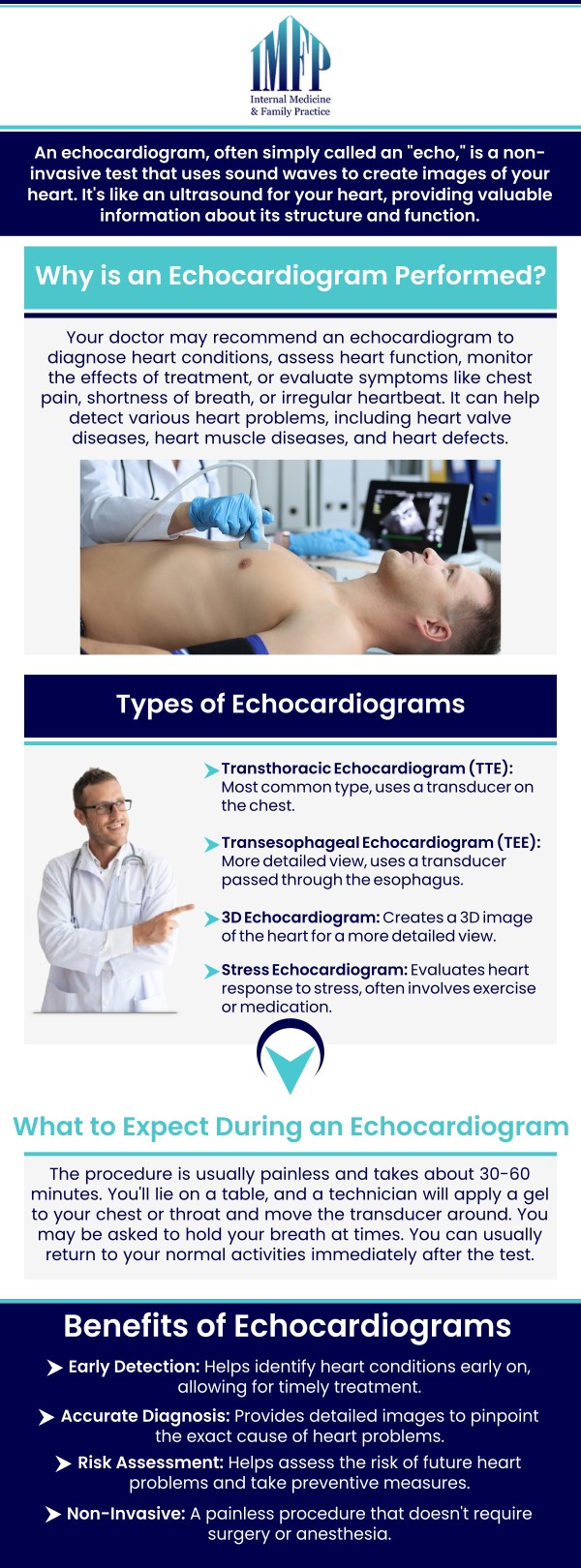
Table of Contents:
How do I prepare for a standard echocardiogram?
Should I avoid eating or drinking before an echocardiogram?
What should I wear to an echocardiogram appointment?
How long does an echocardiogram take?
What can I expect during my echocardiogram visit at Internal Medicine and Family Practice?
Preparing for a standard echocardiogram is simple and straightforward. Most echocardiograms are non-invasive and do not require extensive preparation, but there are a few steps to ensure the process goes smoothly and results are accurate. First, bring a list of current medications and relevant medical history, including any heart conditions, previous surgeries, or known cardiovascular risk factors. Sharing this information helps our providers interpret the results accurately and tailor care to your specific health profile.
Patients are encouraged to arrive a few minutes early to complete any necessary paperwork and settle in comfortably. While the procedure itself is painless, taking a moment to relax and avoid stress before the test can help ensure that heart rate and blood pressure readings are within your normal range. For patients with questions about the test or special considerations — such as mobility limitations or anxiety about medical procedures — our staff provides guidance beforehand to create a comfortable and well-informed experience.
At Internal Medicine and Family Practice, we also remind patients that a standard echocardiogram does not require sedation, and there are no dietary restrictions for most patients unless the provider specifically advises it otherwise. This makes the procedure convenient and accessible for a wide range of patients.
For most standard echocardiograms, there are no restrictions on eating or drinking before your appointment. Unlike some imaging studies that require fasting, an echocardiogram focuses on visualizing the heart’s structure and function rather than analyzing digestion or metabolism. You can eat and drink normally, including water, before your test.
Certain specialized echocardiograms, such as transesophageal echocardiograms (TEE), may require fasting for several hours before the procedure. Our providers will inform you if your echocardiogram type requires any dietary restrictions. In general, for a standard transthoracic echocardiogram — the most common type — you can maintain your usual diet and hydration, which makes the preparation straightforward and stress-free.
Comfortable, loose-fitting clothing is recommended when visiting Internal Medicine and Family Practice for an echocardiogram. You may be asked to remove clothing from the upper body and wear a gown so that the technician can access the chest area. Clothing with buttons or zippers may need to be adjusted or removed, so soft, easy-to-manage tops are ideal.
It is also advisable to avoid wearing jewelry or metal accessories around the chest or neck area, as these may interfere with the proper placement of the ultrasound transducer. Comfortable clothing helps patients relax during the procedure, which can improve image quality by allowing the technician to position the transducer properly without obstruction.
A standard echocardiogram at Internal Medicine and Family Practice generally takes 30–60 minutes from start to finish. The appointment includes:
● Preparation (5–10 minutes): Getting settled on the exam table, application of conductive gel, and reviewing medical history with the technician.
● Scanning (20–40 minutes): The technician moves the ultrasound transducer across the chest to capture detailed images of the heart’s chambers, valves, and blood flow.
● Review and instructions (5–10 minutes): The provider may discuss the next steps, answer questions, or schedule follow-up care based on the results.
Because the procedure is non-invasive and painless, most patients return to regular activities immediately afterward. This makes echocardiograms a convenient diagnostic tool for patients needing early detection or monitoring of heart conditions.
During your echocardiogram visit at Internal Medicine and Family Practice, you can expect a professional and patient-centered experience. After completing paperwork and providing your medical history, the technician will apply a special gel to your chest to facilitate ultrasound transmission. The transducer is then moved across various angles of your chest, producing live images of your heart on a monitor.
You may be asked to change positions or hold your breath briefly to help the technician capture the clearest images. Most patients experience no pain, only mild pressure from the transducer as it moves across the skin. After the imaging, our provider will analyze the results, reviewing heart structure, valve function, and pumping efficiency. Our providers may also discuss next steps, treatment options, or preventive strategies depending on the findings. For more information, contact us or book an appointment online today! We are conveniently located at 1719 Glenwood Ave Joliet, IL 60435. We serve patients from Joliet IL, Plainfield IL, Lockport IL, Channahon IL, Romeoville IL, Manhattan IL and surrounding areas.
Check Out Our 5 Star Reviews






 Send Text
 How May I Help You?