
How Primary Care Doctors Help With Preventive Health
Primary care doctors are key to preventive health, offering routine check-ups, screenings, and vaccinations to detect health issues early. They collaborate with you to create a tailored health plan, focusing on lifestyle improvements, nutrition, and managing risk factors to ensure long-term wellness. At Internal Medicine and Family Practice, Dr. Wael Mctabi and Dr. Samiullah Choudry provide comprehensive preventive care, supporting your journey to better health through proactive measures and ongoing guidance. For more information, book an appointment online or contact us. We are located at 1719 Glenwood Ave Joliet, IL 60435.
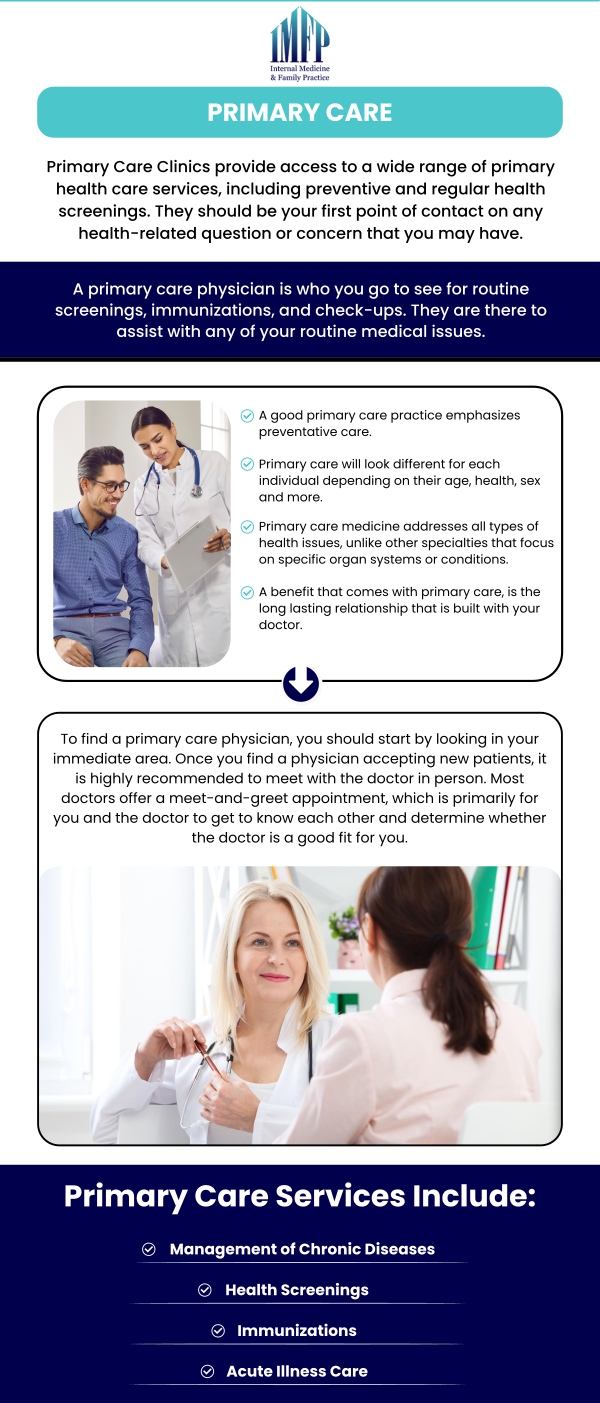
Table of Contents:
How do primary care doctors help prevent chronic diseases?
What screenings do primary care doctors recommend for adults?
How often should I see a primary care doctor for preventive care?
Can primary care doctors help with vaccination and immunization schedules?
How do primary care doctors identify health risks early at Internal Medicine and Family Practice?
Primary care doctors are your absolute first line of defense when it comes to preventing chronic diseases like Type 2 diabetes, hypertension, and heart disease. Instead of waiting for you to become ill, a dedicated primary care physician actively works to keep you healthy by identifying your unique risk factors long before they develop into serious conditions. During your visits at Internal Medicine and Family Practice in Joliet, we conduct comprehensive evaluations of your lifestyle, family medical history, and current physical health. By closely monitoring crucial health metrics—such as your blood pressure, cholesterol levels, and blood sugar—we can detect the earliest, often silent warning signs of chronic illness. When we identify these red flags, we do not just prescribe medication; we collaborate with you to create a personalized, proactive health plan. This might include targeted nutritional counseling, manageable exercise routines, and strategies for stress reduction or smoking cessation. By empowering you with the right tools and continuous medical support, primary care doctors effectively interrupt the progression of chronic diseases, ensuring you maintain a higher quality of life for years to come.
Preventive health screenings are one of the most powerful tools your primary care doctor uses to catch potential health issues when they are most treatable. The specific screenings recommended for adults vary significantly based on your age, biological sex, family history, and current lifestyle factors. For most healthy adults, routine blood work is the foundation of preventive care, typically including a complete blood count (CBC), a lipid panel to check cholesterol, and a comprehensive metabolic panel to evaluate kidney and liver function, as well as blood glucose levels.
As you age, your primary care physician at Internal Medicine and Family Practice will guide you through more targeted screenings. For women, this includes regular Pap smears and HPV testing to prevent cervical cancer, as well as routine mammograms for breast cancer detection. For men, prostate cancer screenings (PSA tests) are often discussed starting in middle age. Additionally, both men and women are strongly advised to undergo routine colonoscopies to screen for colorectal cancer, usually beginning at age 45. We also routinely screen for bone density issues, depression, and sexually transmitted infections, ensuring a truly comprehensive approach to your well-being.
Determining how often you should see your primary care doctor for preventive care is not a one-size-fits-all answer, but establishing a regular cadence is vital for long-term health. For healthy adults under the age of 50 who do not have any chronic medical conditions, an annual physical examination is generally the standard recommendation. This yearly visit allows your doctor to establish a baseline for your health, update necessary immunizations, and perform routine blood work to catch any subtle changes early.
However, if you are over the age of 50, or if you are currently managing a chronic condition such as high blood pressure, asthma, or diabetes, your provider at Internal Medicine and Family Practice will likely need to see you much more frequently. In these cases, visits every three to six months are common to monitor your medication efficacy and adjust your treatment plan as needed. Furthermore, you should never wait for your annual physical if you experience new, concerning symptoms or significant changes in your physical or mental health. Regular, proactive communication with your primary care doctor is the cornerstone of effective preventive medicine.
Yes, managing your vaccination and immunization schedule is a core component of the preventive care provided by primary care doctors. While many people associate vaccines primarily with childhood, staying up-to-date on immunizations is equally critical for adults to prevent serious, sometimes life-threatening illnesses. At Internal Medicine and Family Practice, we meticulously review your immunization history during your annual physicals to ensure you are fully protected.
Your primary care physician will recommend an annual influenza (flu) vaccine, which is updated yearly to combat the most prevalent strains. We also ensure you receive necessary booster shots, such as the Tdap vaccine, which protects against tetanus, diphtheria, and pertussis (whooping cough), typically required every ten years. As you age or if you have specific health conditions, we will guide you on the importance of the pneumococcal vaccine to prevent pneumonia, the Shingrix vaccine to protect against shingles, and current COVID-19 boosters. By keeping your immunization records current and advising you on travel-specific vaccines, your primary care doctor actively shields your immune system from preventable diseases.
At Internal Medicine and Family Practice in Joliet, Dr. Wael Mctabi and Dr. Samiullah Choudry take a personalized approach to identifying health risks early, combining advanced diagnostic technology with strong, ongoing relationships with their patients. They understand that the most effective preventive care comes from truly knowing a patient over time. By carefully monitoring your health through regular visits and comprehensive medical records, they can spot subtle changes — like gradual increases in blood pressure or steady weight fluctuations — that might otherwise go unnoticed by a one-time urgent care visit.
Dr. Mctabi and Dr. Choudry identify these risks through detailed physical examinations, state-of-the-art in-house lab testing, and open conversations about your lifestyle, mental health, and family medical history. This holistic approach allows them to detect early warning signs of conditions like heart disease, diabetes, or high blood pressure, which could otherwise develop silently. When risks are identified, they don’t just hand you a brochure — they implement a personalized, proactive plan immediately. Their goal is to catch potential issues while they are still manageable, increasing the success of treatment and guiding you toward long-lasting health and wellness. For more information, book an appointment online or contact us. We are located at 1719 Glenwood Ave Joliet, IL 60435. We serve patients from Joliet IL, Plainfield IL, Lockport IL, Channahon IL, Romeoville IL, Manhattan IL and surrounding areas.
Check Out Our 5 Star Reviews






 Send Text
 How May I Help You?